
The Ultimate Wedding Planning Checklist in 2026
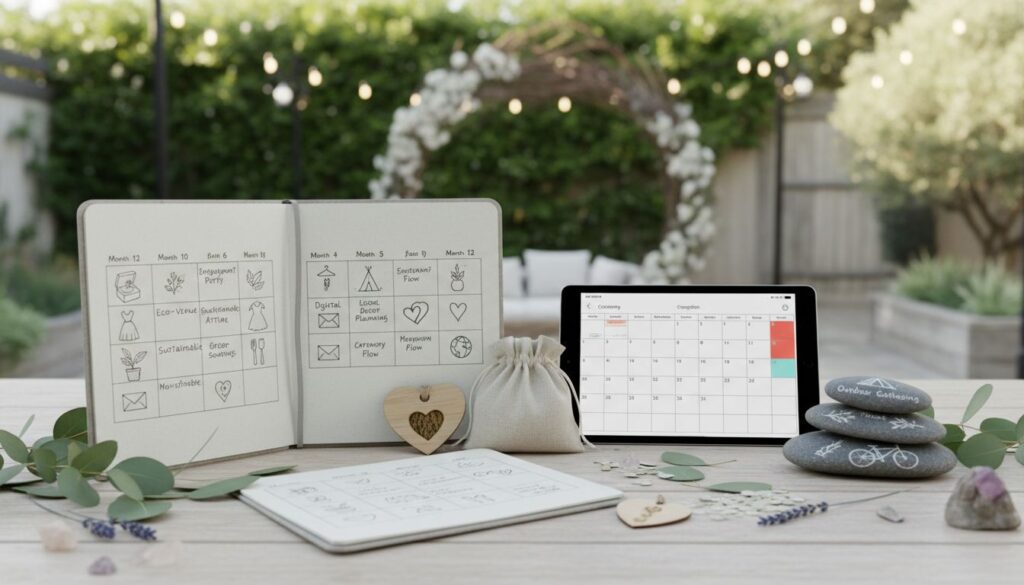
Planning a wedding that feels meaningful and joyful while staying aligned with your environmental values is absolutely possible, especially when you spread it across multiple events. Instead of one massive, resource-intensive party, you can design a connected series of low-waste gatherings that highlight the people, places, and causes you care about. This approach works beautifully for weddings, milestone birthdays, anniversaries, graduations, or community festivals.
Environmental agencies and international organizations increasingly frame events as powerful levers for change. The U.S. Environmental Protection Agency (EPA) defines green meetings as events organized to minimize environmental harm and promote positive social impact, noting that they can reduce toxic materials, waste, greenhouse gas emissions, and water and energy use. When you see your celebration as a small, intentional sustainability program rather than a one-off party, every choice you make,from venues to menus,can reinforce the story you want to tell about your values.
Design your wedding as one integrated sustainability program
When you’re planning multiple events,a welcome dinner, ceremony, reception, and post-celebration brunch, for example,it’s tempting to tackle them one at a time. A more powerful strategy is to treat the entire celebration as a single, integrated sustainability program. The United Nations Environment Programme (UNEP) and its partners emphasize that events of any size can be significant sources of greenhouse gas emissions and broader sustainability impacts. Their Green Events Tool shows that looking at an event holistically, from the planning stage, makes it easier to understand and manage its full footprint.
Applied to a multi-event celebration, this means making one master sustainability plan that spans all dates and locations. Instead of sourcing décor, catering, and transport separately for each event, you coordinate them so that materials, suppliers, and logistics are shared wherever possible. You might, for instance, design modular decorations that travel from the engagement party to the ceremony to the reception, or work with a single caterer who understands your low-waste goals and can reuse equipment and serving ware throughout.
Thinking in program terms also helps you stay focused on impact rather than perfection. You can define a handful of core commitments,such as prioritizing low-carbon travel, tracking waste prevention, and supporting local suppliers,and carry those pillars through the entire celebration. This creates a coherent narrative and makes it easier to communicate your intentions to guests and vendors, building momentum across every event.
Start with sustainability at the planning table, not as an afterthought
The most effective eco-friendly wedding weave sustainability into the earliest planning conversations. The EPA’s Green Meeting Guide is explicitly designed to help organizers include green considerations “as early as possible” in event preparation, because decisions made at the start,like venue location, date, and format,lock in a large share of your environmental impact. Once contracts are signed and invitations are sent, it’s much harder to pivot away from wasteful practices.
At the initial brainstorming stage, map out your full celebration: what events you’re imagining, where they might take place, and who might attend in person versus virtually. Then, alongside questions about budget and guest experience, include sustainability questions: How can we minimize travel? Can we cluster events in one area? What local venues are accessible by public transport? Early alignment on these questions ensures that your celebration format is designed with the environment in mind, not retrofitted later.
Bringing sustainability in from the start also means choosing vendors and partners who understand your goals. When you send your first request for proposals to venues, caterers, and decorators, include your low-waste and climate-aligned principles in the brief. Ask about their existing green practices, from water and energy efficiency to waste handling. This positions sustainability as a shared expectation rather than a last-minute special request, and it often surfaces creative ideas you might not have considered.
Compare wedding formats using a sustainability assessment tool
Before locking in your celebration design, take advantage of tools built specifically to evaluate event impacts. UNEP, the UN Framework Convention on Climate Change (UNFCCC), and partners developed the Green Events Tool to help organizers systematically assess the greenhouse gas emission profile of proposed events, design mitigation measures, and transparently report actual impacts. While the tool is often used for conferences and large meetings, the underlying logic is just as helpful for personal or community celebrations spread over multiple days or locations.
Begin by outlining two or three potential celebration formats. For example, one option might be a single weekend with all events in one city; another could spread the festivities across two regions to include more family; a third might mix in virtual elements to reduce travel. Using a sustainability tool,or even a simplified version of its criteria,you can compare likely emissions from travel, energy use at venues, catering, and materials for each scenario.
This comparison often reveals that choices like clustering events in a single, transit-accessible location or substituting one in-person event with a high-quality virtual gathering can significantly reduce your climate footprint. It also helps you identify where mitigation will matter most, whether that’s encouraging train travel over flights, investing in energy-efficient venues, or reducing material-heavy décor. Making these trade-offs explicit at the planning stage turns sustainability into a guiding framework rather than a vague intention.
Choose venues and logistics that cut travel and energy use
Travel is frequently one of the largest sources of greenhouse gas emissions for events. The EPA’s framing of green meetings highlights reduced greenhouse gas emissions as a core benefit, and in practice this supports strategies such as clustering events in one location and minimizing separate trips across a multi-event celebration. When deciding where to host your gatherings, prioritize venues that reduce unnecessary movement and make low-carbon travel easier for your guests.
One approach is to select a central hub,such as a walkable neighborhood or campus,where multiple events can take place within walking or cycling distance of one another. Guests might stay within a single district, moving between a ceremony venue, a reception hall, and a brunch café without ever needing a car. Public transport access is equally important: choosing venues near train stations, metro stops, or key bus lines allows guests to arrive without relying on private vehicles.
Within each venue, look for resource efficiency. UNEP’s sustainability frameworks stress efficient use of energy, land, and water, and many modern venues now advertise their efficiency features, from LED lighting and renewable energy contracts to water-saving fixtures. Ask venue managers about their energy sources, heating and cooling systems, and waste management practices. A venue that already tracks and reduces its own footprint makes it much simpler to align your celebration with your broader eco-friendly goals.
Make waste prevention your guiding metric across all events
If you track one sustainability metric across your celebration, make it waste prevention. The EPA’s special-event best practices emphasize planning a to reduce waste, framing it not as an after-the-fact cleanup issue but as a design challenge. For a multi-event celebration, this means setting a clear waste-prevention target,such as reducing total waste per guest or aligning with Zero Waste principles,and using that to guide decisions for each gathering.
Zero Waste principles, highlighted in UNEP’s International Day of Zero Waste, focus on sustainable consumption and production patterns to address the waste pollution crisis. Instead of simply recycling after the fact, you aim to avoid waste creation wherever possible. In practice, that can mean minimizing giveaways and favors, choosing rental or reusable items over disposables, and avoiding over-ordering food. You can also design menus and schedules to reduce leftovers, coordinate donation plans in advance, and arrange for composting wherever feasible.
To keep waste prevention central, create a simple tracking system for each event: measure quantities of materials purchased, estimate or weigh waste generated, and document how much was prevented or diverted from landfill through reuse, donation, or recycling. Over the course of your celebration series, you’ll start to see patterns,perhaps one type of event consistently generates more food waste or packaging,and you can make real-time adjustments for subsequent gatherings.
Ban single-use items and design for circularity
One of the most visible steps toward an eco-friendly celebration is to avoid single-use items wherever possible. UNEP’s guidance for official side events encourages organizers to reduce or ban single-use plastics and ensure sustainable waste handling,principles that translate directly to weddings, reunions, and community festivals. When you extend this thinking across multiple events, the impact multiplies.
Start by identifying where disposables typically show up: cups, plates, cutlery, straws, napkins, miniature toiletry kits, balloons, banners, and gift packaging. For each category, look for reusable, durable alternatives that can be used at multiple events in your celebration series. For example, you might rent glassware and dishware for every gathering, use cloth napkins that travel from one venue to another, and rely on digital signage or reusable boards instead of printed banners that are discarded after a single use.
UNEP’s Environmental and Social Sustainability Framework highlights circular approaches and resource efficiency as core principles. A circular celebration not only avoids disposables but also keeps materials in use at their highest value for as long as possible. You could design decor that disassembles into useful items for your home or community, choose potted plants instead of cut flowers so they can be replanted, or select favors that are consumable, refillable, or designed for long-term use. Over several events, these circular choices reduce both resource use and waste generation, while telling a coherent story about your values.
Source décor, signage, and paper products sustainably
Beyond food and travel, celebrations often consume a surprising amount of materials in the form of décor, signage, awards, and paper products. The EPA explicitly calls out these categories,paper goods, signage, awards, and plaques,as key considerations in green meetings. Applying sustainable procurement practices to these items across your entire celebration can dramatically reduce their environmental impact.
When choosing decorations, favor items that are rented, borrowed, or sourced secondhand. This could include table linens, candle holders, arches, and backdrops that are designed to be used repeatedly. For printed materials like programs, menus, and schedules, opt for recycled-content paper, vegetable-based inks, and minimal print runs. You can supplement or replace printed items with digital solutions, such as QR codes that link to event details, which can be updated easily for each new gathering.
Awards, gifts, and keepsakes deserve the same scrutiny. Rather than traditional plaques or novelty items that may end up in storage or landfill, consider experiences, donations to local causes, or practical objects made from responsibly sourced, durable materials. Sourcing from local artisans or social enterprises can also amplify the positive social impact of your celebration. Documenting these choices and sharing them with guests not only increases transparency but may also inspire them to apply similar procurement principles to their own future events.
Coordinate schedules and venues with a big-picture calendar
Coordinating multiple events requires careful scheduling; doing it sustainably means zooming out even further. UNEP maintains active meetings and events pages that show ongoing event scheduling and categories, emphasizing the importance of coordinated planning in the international space. You can borrow this mindset by building a master calendar that maps your celebration events, their locations, and the sustainability considerations that accompany each one.
On a practical level, a unified calendar helps you sequence events to reduce back-and-forth travel, share rentals and equipment efficiently, and avoid scheduling conflicts that could lead to last-minute, higher-impact choices. For example, you might schedule your ceremony and reception on consecutive days at neighboring venues to maximize reuse of décor and minimize guest transport. A later, smaller gathering,such as a family brunch or volunteer activity,could be timed to coincide with guests already being in town, eliminating extra trips.
This broader planning lens also allows you to align with community and seasonal cycles. You might plan an outdoor event in a season that reduces the need for heating or air conditioning, or schedule a volunteer or educational component to coincide with international observances like UNEP’s Zero Waste Day. In doing so, your personal celebration becomes part of a larger, visible movement toward sustainable consumption and production.
Measure, report, and adapt after each event
To truly learn from your multi-event celebration, treat each gathering as both a meaningful occasion and a small sustainability pilot. UNEP’s Green Events Tool supports transparent reporting of greenhouse gas emissions and sustainability impacts resulting from events, underscoring the value of measurement and disclosure. While you may not need the full rigor of an institutional reporting system, adopting its spirit can dramatically improve your outcomes.
After each event, capture simple metrics: approximate travel modes and distances for guests, energy use if available from the venue, quantities of materials purchased, and amounts of waste, recycling, and compost. Document qualitative insights as well,what reuse strategies worked, where single-use items slipped back in, how guests responded to low-waste features, and which vendors were most aligned with your goals. This information becomes your evidence base for adjusting subsequent events in the series.
Sharing these results, even informally, reinforces accountability and invites collaboration. You might include a brief sustainability recap in follow-up messages to guests or in a shared photo album, highlighting what you achieved and what you’ll try to improve next time. Over time, this transparency helps normalize eco-friendly practices in your community and demonstrates that meaningful celebrations can evolve and improve without sacrificing joy.
When you bring all of these elements together,early-stage sustainability planning, integrated program design, waste prevention, circular procurement, and transparent measurement,you create more than just a string of events. You build a meaningful, low-waste celebration that reflects your values in action. The EPA’s vision of green meetings and UNEP’s emphasis on circularity and Zero Waste principles show that gatherings can reduce environmental harm while catalyzing positive social impact.
Most importantly, this approach invites your community into a shared story. Each event in your celebration series becomes an opportunity to model what sustainable living can look and feel like: creative, connective, and deeply intentional. By treating your multi-event celebration as a small, thoughtful sustainability program, you not only honor your milestone,you help shift expectations of what celebration itself can be, inspiring others to choose lower-impact, higher-meaning ways of coming together.
